On the word *holistic*, and why I still use it
I don't particularly like the word holistic. I use it anyway.
It is stuck to a generation of promises. Aroma-oil workshops, moon rhythms, tea from eleven herbs against everything. Over the last ten years it has lost as much meaning in the German-speaking wellness landscape as almost any other term, and I rarely encounter it other than as rhetorical padding. Holistic today often means unscientific, but kindly packaged. That is a position I do not share, and yet the word sits in my professional title.
It is worth stepping back and asking what it originally meant.
Holism, briefly
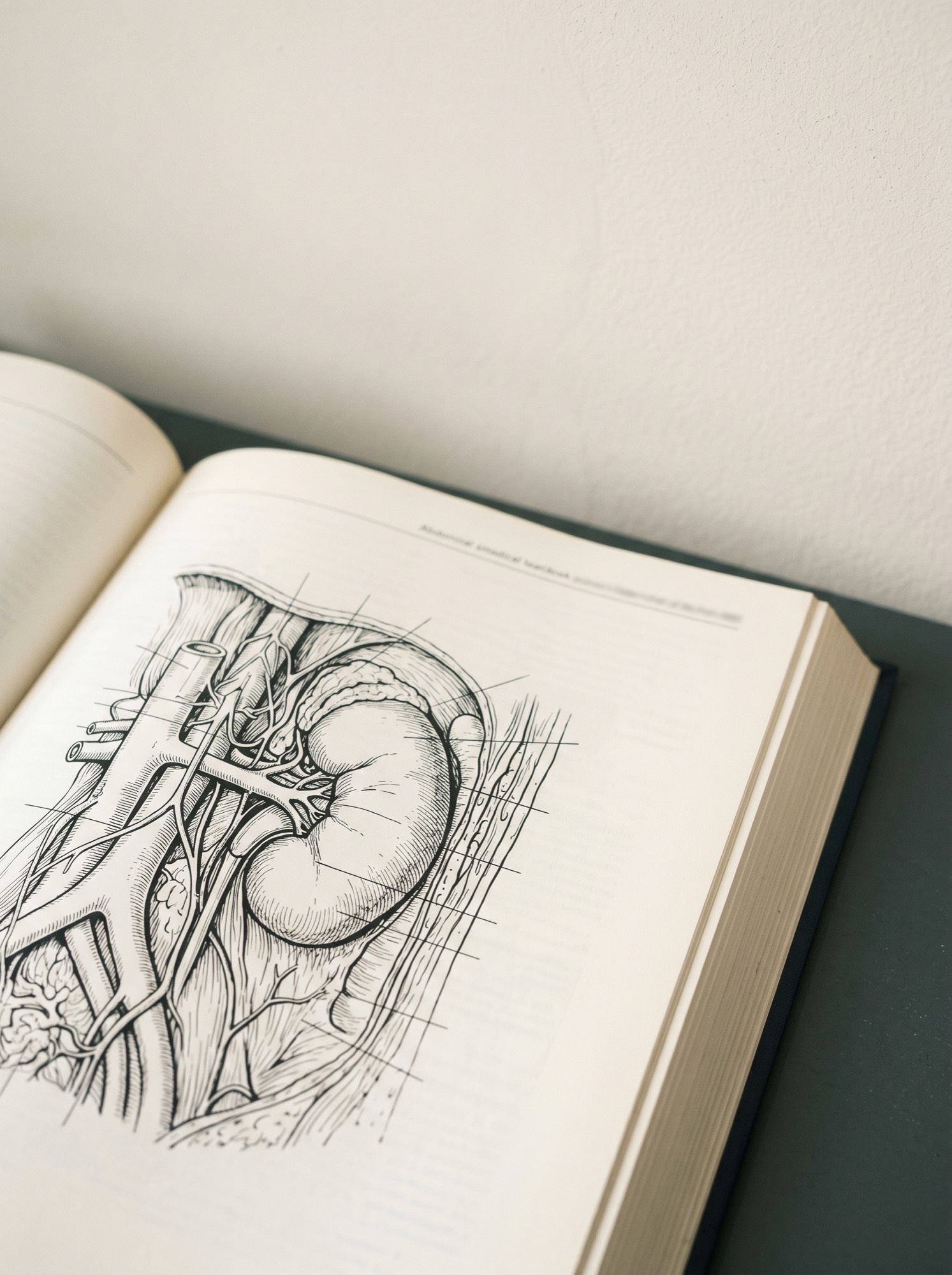
The term comes from the English holism, coined in 1926 by the South African statesman and natural philosopher Jan Smuts in his book Holism and Evolution. Smuts was no esotericist, but a botanist and politician whose biographical shadows must be discussed separately. His philosophical argument, however, was precise. Living systems are more than the sum of their parts, and they function in relationships, not in lists. A kidney is not a kidney. It is a kidney in a body that sleeps, eats, moves, worries. A person is not a metabolism. They are a metabolism in a life.
That is not romantic. That is a systems-theory statement. A hundred years later it is compatible with everything we know about microbiome, sleep architecture, hormonal axes, and inflammation regulation. Isolated symptom treatment (better digestion with this enzyme) is not wrong, but it is incomplete.
What I do not mean by it
When I call myself a holistic nutrition coach today, I do not mean: that foods have energy you can smell. Not: that there are foods that heal, and ones that make you sick. Not: that your star sign determines your digestion. Not: that every adult has a nutrient deficiency a powder will fix. Not: that a detox week has any meaning beyond a quiet stomach.
I do not mean that science is optional. I do not mean that pseudoscience is acceptable as long as it sounds friendly. I do not mean that fifteen years in spa houses qualify me to diagnose anything.
What I do mean
When I speak to an adult about nutrition, the question is rarely What should I eat?. Most people already know. The open questions sound different. Why am I eating chocolate at three in the afternoon when I'm not hungry? Why have I been sleeping so thinly for two years now? Why is what works for my sister not working for me?
These are not nutrition questions in any narrow sense. They are questions about rhythm, sleep, light, stress, hormones, relationship, the home environment. Answer them in isolation (eat more protein at breakfast) and you'll be right and change nothing. Look at them together and you sometimes move forward.
That is the kind of holism I need. Not as a counter-model to science, but as its complementary angle. I read Peter Attia and I listen to Huberman, and I find them both excellent, and I find them both incomplete. They are incomplete in the way a good textbook is incomplete. It describes correctly how things work. But it does not walk you through your Tuesday.
Where the AKN comes in
The Academy for Complementary Natural Therapies in Lucerne, where I completed my training in early 2026, calls what it teaches holistic health coaching. It is a German-language, very sober programme. No fountain of healing promises. It requires anatomy, pathophysiology, micronutrients, nutritional science at a serious level. It requires, additionally, that one think about people in life contexts, not in meal plans.
This is the connection that never came together for me in any purely clinical model, and would not have come together for me in any purely wellness model either. I need both sides.
So why I stay with the word
The word holistic is worn out. But in German it is still the only one that says body, daily life, and person in the same breath, without committing to a discipline. Functional nutrition nails it technically, but it sounds like powder. Integrative medicine is academic, but not mine. Lifestyle coaching gets the register right, but not the substance.
So I stay with it, on one condition. I earn the word fresh every day. By what I do, read, ask, and most of all by what I do not promise.